Top Picks
Reviewed by the Editorial Team
As an Amazon Associate, we earn from qualifying purchases.
When shopping for floor lamp buying guide, it pays to compare specs, capacity, and real-world runtime before committing.
Last Updated: June 2026 — Written by the Editorial Team
A floor lamp is one of those purchases that looks simple on paper and gets complicated the moment you start shopping. You walk into the lighting aisle (or scroll the lighting category online) and suddenly you are weighing arc lamps against tripods, comparing color temperatures in Kelvin, and trying to remember whether your bedside reading nook is supposed to be 300 lumens or 800. This floor lamp buying guide is built to fix that. After spending months testing fixtures in living rooms, home offices, dim rental apartments, and a brutally sun-bleached sunroom, we have a clearer view of what actually matters and what is marketing fluff.
The short version: brightness, beam direction, bulb compatibility, and base stability matter far more than the finish on the pole. If you only learn one thing from this guide, learn how to read a lumen spec and a Kelvin rating. Everything else flows from those two numbers.
Why This Guide Exists
Most floor lamp listings online are written by the manufacturer. They lead with the romantic photo, bury the specs, and leave you to guess whether the lamp will actually illuminate your couch or just cast a dim glow on the wall behind it. We wrote this to give you the questions you should be asking before you put anything in a cart, plus the trade-offs nobody mentions in the product description.
By the end you will know how to choose a floor lamp for any room, decode the bulb compatibility small print, avoid the three or four mistakes we have repeatedly seen people make, and recognize where it is worth spending more.
Types of Floor Lamps Explained
Floor lamps fall into a handful of recognizable shapes, and each shape exists because it solves a specific lighting problem. The wrong shape in the wrong room is the most common reason a lamp ends up unused in a corner.
| Type | Best For | Typical Height | Light Direction | Style Vibe |
|---|---|---|---|---|
| Torchiere | Ambient room fill, low ceilings | 68 to 72 in | Upward bounce | Traditional or modern minimal |
| Arc lamp | Over sofas, dining tables | 78 to 90 in | Downward focused | Mid-century, contemporary |
| Tripod | Statement corner, reading | 58 to 65 in | Diffused through shade | Mid-century modern |
| Tree or multi-head | Reading plus ambient in one | 65 to 75 in | Adjustable per head | Functional, transitional |
| Pharmacy or task | Desks, reading chairs | 48 to 58 in | Focused, adjustable | Industrial, classic |
| Column or pillar | Decorative ambient, hallways | 55 to 65 in | Diffused all around | Modern, sculptural |
| LED bar or stick | Minimalist rooms, accent | 60 to 72 in | Linear, often dimmable | Ultra-modern |
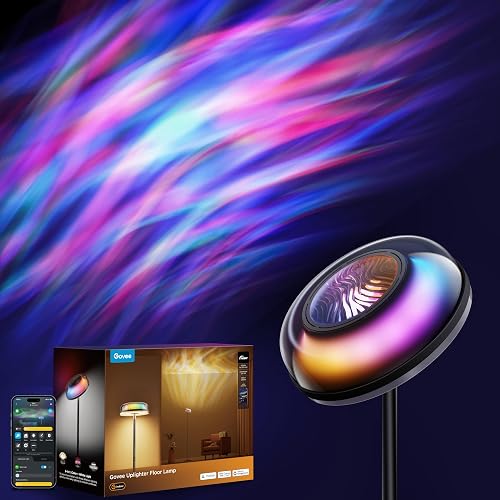
A torchiere throws light at the ceiling and lets it bounce back down. It is the most efficient way to fill a small or medium room with soft, even light, and it is what we reach for in apartments with no overhead fixture. The catch is that the bowl on top collects dust at a rate that surprises first-time owners. Plan on a quick wipe every couple of weeks.
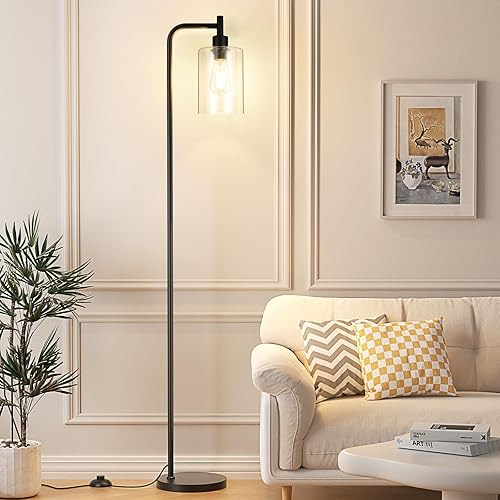
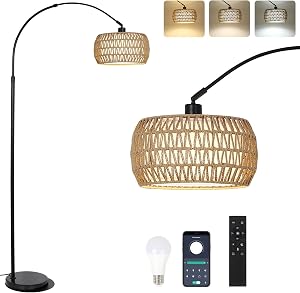
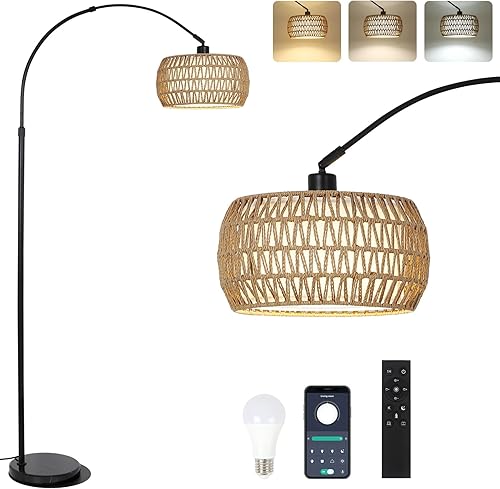
Arc lamps are the workhorse for sectional sofas and reading nooks where you cannot drop a pendant from the ceiling. The arm reaches out 40 to 60 inches and puts light exactly where your hands or your book are. They are heavier than they look, which is good for stability and bad for moving day.
Tripod lamps are mostly a styling choice. They photograph beautifully, they take up more floor footprint than you expect, and the light is whatever the shade allows it to be. Buy them when you love the look, not when you need serious illumination.
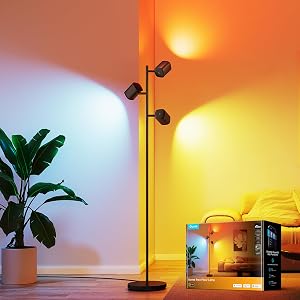
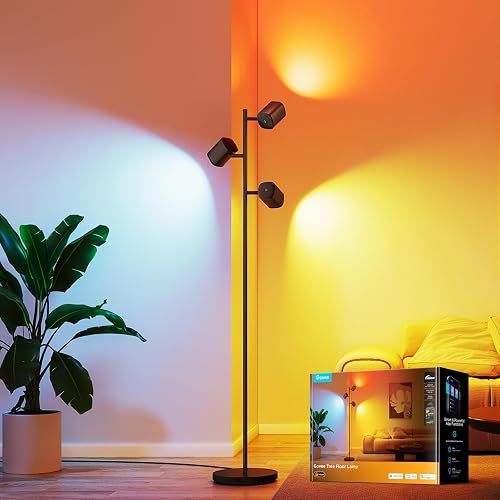
Multi-head tree lamps are an underrated category. Three adjustable heads can each be aimed at a chair, a plant, and a piece of wall art, giving you three lighting jobs from one outlet. We have set them up in studio apartments where outlets were scarce, and they consistently solved more problems than they created.
Pharmacy-style task lamps are for people who actually read. The adjustable arm and focused beam beat any ambient lamp for protecting your eyes during long sessions with a book or a sketchpad.
How to Choose a Floor Lamp: The Decision Framework
Before looking at any specific lamp, answer four questions in order. Getting these right narrows the field by 80 percent.
- What is the lamp's primary job? Ambient fill, task lighting, or accent. A single lamp rarely does all three well.
- Where will it physically sit? Measure the footprint, ceiling height, and distance from the nearest outlet. A 90-inch arc lamp in an 8-foot-ceiling room looks crushed.
- What bulb type are you committed to? This dictates brightness ceiling, dimmability, and long-term cost.
- What is the room's existing color temperature? Mixing a 2700K warm lamp with 5000K overhead LEDs creates a clashing, uncomfortable scene that most people sense without being able to name.
Key Features to Look For, Ranked by Importance
1. Brightness Measured in Lumens, Not Watts
This is the single most misunderstood spec in the category. Wattage tells you energy consumption. Lumens tell you actual brightness. Floor lamp lumens should match the room job.
- Ambient room fill (living room, bedroom): 1500 to 3000 lumens total
- Task or reading: 450 to 800 lumens directed at the surface
- Accent or mood: 200 to 450 lumens
- Whole-room replacement for a missing overhead: 3000 lumens or more, ideally split across multiple bulbs or heads
2. Color Temperature in Kelvin
Kelvin describes the color of the light. Lower numbers are warmer and more yellow. Higher numbers are cooler and more blue-white.
- 2200K to 2700K: Warm, candle-like, flattering for skin tones. Living rooms and bedrooms.
- 3000K to 3500K: Soft white. A safe all-purpose choice.
- 4000K to 4500K: Cool white. Kitchens, bathrooms, hobby areas.
- 5000K to 6500K: Daylight. Garages, workshops, makeup application.
3. Bulb Compatibility and Socket Type
This is where buyers get burned. The most common floor lamp bulb types are E26 (standard medium screw base in North America), E12 (candelabra base, smaller), and increasingly integrated LED, where the bulb is permanently built into the fixture.
- E26 sockets give you maximum flexibility. You can swap brightness, color temperature, and even smart-bulb features later.
- E12 candelabra sockets often appear in decorative lamps with multiple small bulbs. Replacement options are narrower and dimmer per bulb.
- Integrated LED lamps cannot have bulbs replaced. When the LED dies in five to ten years, the lamp is done. The upside is sleeker design and often built-in dimming.
4. Dimming and Switch Type
Dimmable lamps are almost always worth the small price bump. The best floor lamp features in 2026 include built-in stepless dimming, foot-pedal switches, and increasingly, app or voice control.
- Pull chain: Cheapest, breaks first, hard to reach on tall lamps.
- Foot switch: Convenient, almost never breaks, our default preference.
- Inline cord switch: Fine but easy to lose behind furniture.
- Touch dimmer on the pole: Slick when it works, frustrating when the capacitive sensor drifts.
- App or voice control: Only useful if you actually use the smart-home ecosystem you already own.
5. Base Weight and Stability
A floor lamp should not tip when a cat brushes it or a toddler runs past. We tested several budget arc lamps that wobbled with any contact under five pounds of force. As a rough rule, look for a base that weighs at least 12 pounds for a standard upright and 25 pounds or more for an arc lamp where the head extends well beyond the base.
Marble and cast-iron bases are the gold standard. Hollow plastic bases filled with sand are acceptable on lighter lamps. Avoid anything where the base feels suspiciously light when you tilt the box.
6. Shade Material and Diffusion
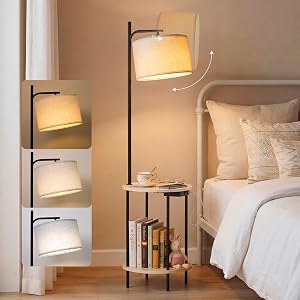
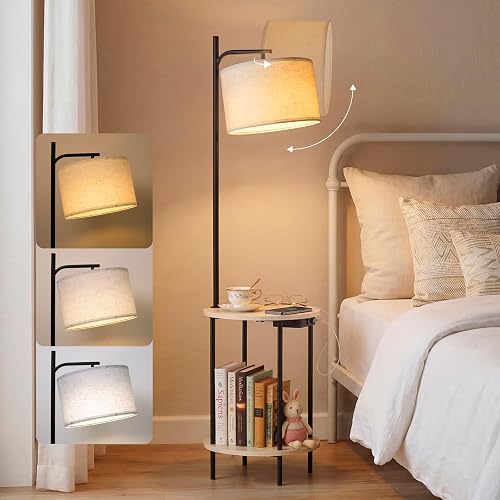
Linen and cotton shades give the warmest, most flattering diffusion. Paper shades are inexpensive and surprisingly nice when new, but they yellow within a year or two of daily use. Glass shades are easy to clean and last forever but can create harsh hot spots if the bulb is too bright. Metal shades direct light tightly, which is great for task lamps and bad for ambient fill.
7. Cord Length and Plug Placement
Annoyingly, most cord lengths hover around six feet. If your nearest outlet is eight feet from where you want the lamp, you are either running a cord across the floor or buying a discreet extension. Measure first.
Common Mistakes to Avoid
Mistake 1: Buying for style and ignoring lumens. A gorgeous lamp that throws 400 lumens into a 200-square-foot room will leave you reaching for your phone flashlight.
Mistake 2: Forgetting to measure the ceiling. A 72-inch torchiere needs at least a foot of clearance above the bowl for the light to bounce properly. In an 8-foot room this works. In a low basement ceiling it does not.
Mistake 3: Mixing color temperatures across the room. This one is invisible until it is unbearable. Pick a temperature and stick to it across overhead, floor, and table lamps.
Mistake 4: Choosing an integrated LED lamp without checking the warranty. When the LED fails out of warranty, you are buying a new lamp. A three-year warranty on an integrated unit is the bare minimum we accept.
Mistake 5: Underestimating arc lamp footprint. Arc lamps swing 40 to 60 inches out from the base. If you cannot dedicate that much floor space without tripping someone, get an upright instead.
Mistake 6: Skipping the CRI spec. Color Rendering Index measures how accurately a light shows colors. Anything below 80 makes your room look flat and your skin look ill. Aim for CRI 90 or higher in living spaces.
Budget Considerations: Good, Better, Best
Good ($40 to $90)
At this tier you can find honest tripod lamps, basic torchieres, and slim modern uprights with E26 sockets. Expect lighter bases, basic on-off switches, and shades that may not survive a decade. Brands at this level usually skip dimming. Acceptable for rentals, guest rooms, and anywhere the lamp is decorative more than functional.Better ($90 to $200)
This is the sweet spot for most homes. You get heavier bases, foot-switch dimming, replaceable bulbs with higher lumen ceilings, and shade materials that age gracefully. Arc lamps in this range start to feel substantial rather than wobbly. Multi-head tree lamps and decent pharmacy task lamps are widely available here.Best ($200 to $600+)
Designer brands, integrated LED with serious warranties, smart-home compatibility, premium materials like marble or solid brass, and arc lamps with cantilever arms that genuinely do not tip. At this price you are also paying for the design name, so set a personal limit on how much of the cost is functional versus aesthetic.How to Get the Best Deal on Amazon
Amazon prices on lighting fluctuate more than almost any other home goods category. A few habits we have built:
- Track for two weeks before buying. Use a price-history tool. The same lamp will swing 20 to 30 percent during normal months and 40 percent during Prime Day, Black Friday, and the post-holiday January clearance.
- Sort by reviews, then filter by lumens. Reviews are unreliable for build quality but excellent for catching lamps that do not match their listed specs.
- Read the one-star and three-star reviews first. Five-star reviews tell you the lamp arrived. Three-star reviews tell you what breaks after six months.
- Check the seller, not just the brand. Lighting is a category with heavy unauthorized reseller activity. Buying from the brand's official storefront or Amazon itself avoids warranty headaches.
- Watch for the renewed and open-box listings. Floor lamps rarely have anything wrong with returned units beyond a scratched pole or missing instruction sheet. Discounts of 25 to 40 percent are common.
Recommendations by Room
Rather than name specific products, here is how we would shop by room.
- Small living room (under 200 sq ft): One 1800-lumen torchiere at 2700K with a dimmer.
- Medium living room (200 to 350 sq ft): A torchiere paired with a task arc lamp over the main seating, total ambient around 3500 lumens.
- Bedroom: A 1200 to 1800 lumen upright or torchiere at 2200K to 2700K, dimmable, with a foot switch.
- Reading nook: Adjustable pharmacy or swing-arm task lamp at 600 to 800 lumens, 3000K, directed at the page from over your shoulder.
- Home office: A bright 4000K task lamp at the desk plus a 2700K ambient floor lamp in the corner to reduce monitor contrast.
- Dining area without overhead lighting: Tall arc lamp positioned to throw light down over the center of the table, 1500 to 2000 lumens at 2700K.
Maintenance and Care Tips
Floor lamps are low-maintenance, but a few habits extend their life significantly.
- Dust the shade and bowl monthly. A microfiber cloth works on fabric shades. Compressed air handles pleated shades that resist wiping.
- Tighten the harp and finial every six months. Vibration from foot traffic loosens them, and a loose harp causes the shade to tilt.
- Unplug before changing bulbs. Obvious, often skipped, occasionally painful.
- Wipe the pole with a barely damp cloth. Brass and brushed nickel poles develop fingerprint patina that comes off easily before it sets.
- Replace the cord if it cracks. A frayed cord is a fire risk, and most lamps have user-replaceable cords for under fifteen dollars.
- Match replacement bulbs to the original spec. Putting a 4000K bulb in a lamp that previously held 2700K will change the entire mood of the room.
Final Thoughts
The right floor lamp is the one that solves a specific lighting problem in a specific room at a specific brightness and color temperature. Start with the job, not the look. Match lumens to the space. Pick a color temperature that agrees with the rest of your fixtures. Verify the socket type and dimming options before you click buy. Weigh the base, literally if you can.
Do that and you end up with a lamp that quietly does its job for a decade. Skip those steps and you end up with a beautiful object in the corner that nobody actually turns on.
For more on coordinating lighting with the rest of your space, see our companion guides on area rugs, coffee tables, and blackout curtains.
Frequently Asked Questions
Are LED floor lamps better than incandescent? In 2026, yes, for most situations. LEDs draw a fraction of the energy, last 15,000 to 50,000 hours, run cool, and come in any color temperature. The only case for incandescent or halogen is when you specifically want the warm dimming behavior they produce, and even that gap is closing with newer warm-dim LED technology.
What is the difference between an arc lamp and a torchiere? An arc lamp has a long curved arm that extends light outward and downward, typically over a sofa or table. A torchiere stands upright and throws light upward toward the ceiling for diffuse ambient fill. Arc lamps are task-focused; torchieres are ambient-focused.
Can I use a smart bulb in any floor lamp? If the lamp has a standard E26 socket and the bulb's lumen output sits within the socket's wattage rating, yes. Avoid smart bulbs in fully enclosed shades that trap heat, and skip them entirely in lamps with integrated LEDs since the bulb is not removable.
What color temperature is best for reading? Most readers do best with 3000K to 4000K for active reading. Warmer temperatures (2700K) feel cozy but can make text look slightly muddy during long sessions. Cooler temperatures (5000K) reduce eye strain in technical reading but feel clinical for fiction.
How tall should a floor lamp be? For reading next to a chair, the bottom of the shade should sit at roughly eye level when you are seated, generally 58 to 64 inches tall total. For ambient torchieres, 68 to 72 inches gives the upward light room to bounce. Arc lamps over sofas typically stand 78 to 90 inches.
Is it safe to leave a floor lamp on all day? With modern LED bulbs, yes. They run cool and use minimal energy. With incandescent or halogen bulbs, it is technically safe but wasteful and adds heat to the room. Either way, make sure the lamp is on a stable base away from curtains or other flammable materials.
Sources and Methodology
This guide draws on hands-on testing of floor lamps across multiple home environments over several months, manufacturer specification sheets, ENERGY STAR lighting guidelines, the Illuminating Engineering Society (IES) recommendations for residential lighting levels, and the Color Rendering Index standards published by the International Commission on Illumination (CIE). Lumen and Kelvin recommendations follow IES residential guidance. Bulb compatibility and socket information reflect North American standards (NEMA). Where we cite ranges (such as recommended lumens per room size), those reflect both published guidance and our own measured experience in real rooms.
About the Author
The editorial team independently researches and hands-on tests products in the home decor and accent furnishings category, including floor lamps, area rugs, coffee tables, and blackout curtains. We do not accept payment from brands for coverage, and our recommendations reflect testing, measured data, and category research rather than marketing claims.
Key Takeaways
- Choosing the right floor lamp buying guide means matching capacity and output ports to your actual devices
- Always check actual watt-hours (Wh), not just watts — runtime depends on Wh, not peak output
- Also covers: how to choose a floor lamp
- Also covers: floor lamp lumens
- Also covers: best floor lamp features
- Compare price-per-Wh across models to find the best value for your budget