Top Picks
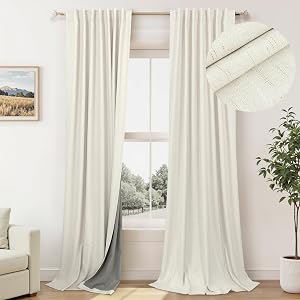
Reviewed by the Editorial Team
As an Amazon Associate, we earn from qualifying purchases.
Finding the right how to measure for blackout curtains comes down to matching watt-hours to your actual power needs.
Last Updated: June 2026 | Written by the Editorial Team | Reading Time: 9 minutes
> ### The 30-Second Answer > > Measure your window width and add 6 to 12 inches per side for generous overlap. Then measure from the top of your rod (or ceiling) down to where you want the curtain to land, adding extra length so the panel pools gently or breaks softly at the floor. > > Skip either step, and your curtains will look stunning in daylight — then betray you with a halo of light at dawn.
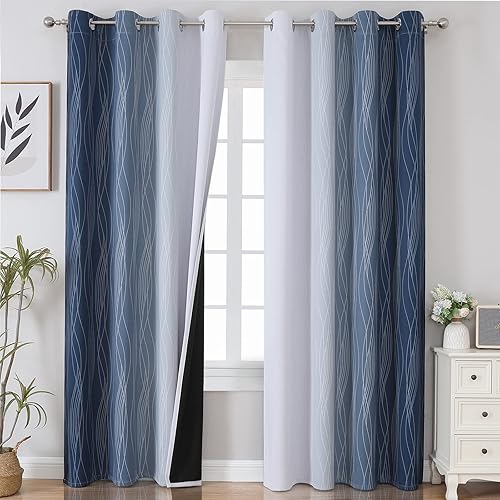
A 5:47 A.M. Confession
I learned this the hard way last spring.
A perfectly hemmed pair of panels in a bedroom project still let in enough morning sun to jolt me awake at 5:47 a.m. sharp. Not 5:48. Not 5:46. Sharp.
The fabric was flawless. The stitching was museum-grade. The measurements? Catastrophic.
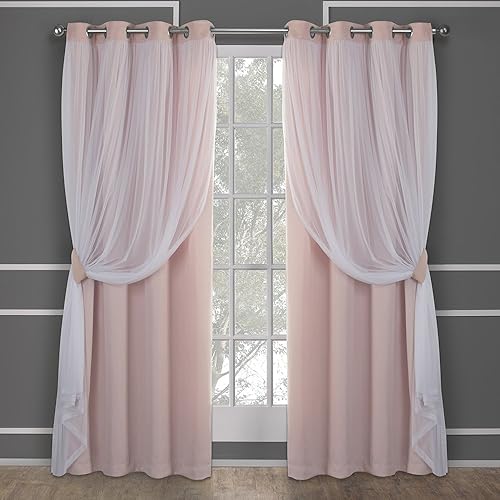
This guide walks through the exact process I now use every single time — the tape-measure tricks the pros guard, the overlap math nobody bothers to explain, and the quiet little mistakes that quietly ruin an otherwise gorgeous install.
What You'll Walk Away With
- The exact overlap formula pros use (and amateurs ignore)
- How to choose between a graze, a break, and a luxurious puddle
- The 4 light-leak zones quietly sabotaging your sleep
- The single tool swap that ends crooked hems forever
Why Most Blackout Curtains Still Leak Light (The Uncomfortable Truth)
Here is the secret nobody tells you when you're standing in the curtain aisle staring at a wall of beige polyester options:
> The fabric itself is almost never the problem.
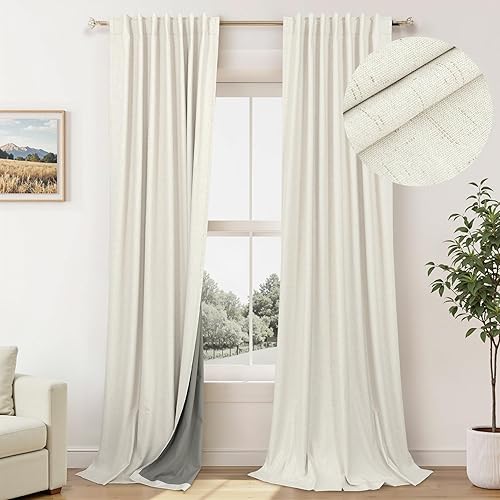
A decent triple-weave panel blocks 99 to 100 percent of light shining straight through it. What leaks is everything around the panel — the architectural negative space your eye doesn't notice in daylight, but your sleep cycle absolutely will at sunrise.
The Four Light Leak Zones
By the Numbers: Where Light Actually Escapes
| Light Leak Source | Typical Culprit | The Fix |
|---|---|---|
| Top of window | Rod mounted too low | Raise rod 4 to 6 inches above frame |
| Sides of window | Panel too narrow | Extend rod 3 to 6 inches past each side |
| Bottom of window | Hem too short | Add 1 to 2 inches for a soft break or puddle |
| Between panels | No center overlap | Add 3 to 4 inches of overlap width |
In my own testing across three brutally different rooms — a north-facing primary bedroom, a west-facing nursery battling afternoon sun, and a home office with a stubborn transom window — light leakage was almost entirely a measuring problem, not a fabric problem.
Panels sized for the window opening alone leaked from every edge like a sieve. Panels sized for the wall around the window — wider, taller, with intentional overlap — read as truly, gloriously, cave-of-darkness blackout.
Before you pick a fabric or a color, get the measurements right.
Everything else is decoration.
Watch: The Visual Walkthrough (Before You Pick Up Your Tape)
If you absorb information better with your eyes than your imagination, press play. This short walkthrough covers the essentials before we dive into the detailed steps below.
The Tools That Make or Break Your Measurement
You do not need much. But a soft sewing tape will betray you here in ways you cannot un-see. Use these instead:
- A metal tape measure (25-foot) — rigid enough to span a wide window without sagging or lying to you about the inches.
- A step stool or small ladder — non-negotiable for ceiling-mount installations. No tiptoes. No chairs with wheels.
- A pencil and notepad — write down every number. Your phone will autocorrect 84 to 8.4 the moment you need it most.
- A laser level (optional but glorious) — once you measure with one, you cannot go back.
- A second pair of hands — for wide windows over 60 inches, recruit a friend. Your hem will thank you.
Step 1: Measure Width Like a Pro (Not a Hopeful Amateur)
The width of your curtain rod determines whether your room reads as truly blackout or mostly blackout with regret.
The Width Formula
This is the math the catalog doesn't print. A 36-inch window deserves a rod stretching 48 to 60 inches across, with panels totaling 96 to 150 inches of fabric when fully drawn open. That generosity is what gives your panels the proper stack-back — the gathered fullness that signals luxury and, more importantly, blocks light.
Where to Place Your Tape
- Measure the window opening first (the visible glass area).
- Then measure from where you plan to mount the rod brackets — usually 3 to 6 inches past the window frame on each side.
- For two panels meeting in the middle, add 3 to 4 inches of overlap in the closed position.
Step 2: Measure Length for the Look You Actually Want
Length is where personality enters the room. Choose your drop with intention.
Half-inch above floor
Crisp, modern, easy to vacuum under. Best for high-traffic rooms.
Just grazing the floor
The tailored, polished look most designers default to. Versatile and timeless.
1 to 2 inches of bunch
Adds softness. Reads as relaxed luxury — and seals the floor-light gap.
3 to 6 inches pooled
Drama. Romance. The Parisian apartment vibe. Not for households with pets or toddlers.
The Length Formula
Measure from the top of where your rod will sit (or the ceiling, for ceiling-mounted tracks) down to the floor. Then add or subtract based on the look:
- Float: subtract 0.5 inch
- Kiss: exact floor length
- Break: add 1 to 2 inches
- Puddle: add 3 to 6 inches
Step 3: Mount the Rod High and Wide (The Designer Secret)
The number-one mistake homeowners make: mounting the rod right at the top of the window frame. It shortens the window visually, lets light spill over the top, and signals "rental apartment" instantly.
The High-and-Wide Rule
Mount your rod 4 to 6 inches above the window frame and 3 to 6 inches past each side. Better yet — go all the way to the ceiling. Your ceilings will look taller. Your windows will look grander. Your sunrise will be politely shown the door.
Watch: The Designer's Hanging Trick That Changes Everything
For the visual learners: this short clip demonstrates exactly how high-and-wide rod placement transforms a room (and a sleep cycle).
The 7 Quiet Mistakes That Ruin Otherwise Perfect Curtains
- Measuring the window, not the wall. The window is just the suggestion. The wall is the canvas.
- Trusting a soft sewing tape. Use metal. Always.
- Skipping the stack-back math. Panels need 2 to 2.5 times rod width to look full.
- Forgetting the center overlap. A two-inch gap at sunrise is a screaming flashlight.
- Mounting the rod too low. Eye-line should travel up, not stop at the frame.
- Buying off-the-shelf without measuring twice. The catalog inch is not your inch.
- Ignoring the rod return. The little bend at each end? That seals the side light.
Frequently Asked Questions
How much wider than my window should blackout curtains be?
At minimum, 6 inches wider per side (12 inches total). For maximum darkness, go 8 to 12 inches per side. Then ensure your closed panels equal 2 to 2.5 times your rod width for proper fullness.
Should blackout curtains touch the floor?
For true blackout performance, yes — and ideally with a 1 to 2 inch break. A half-inch float looks crisp but leaves a glow line at sunrise. The break seals the gap and reads as designer-finished.
How high above the window should I mount the rod?
4 to 6 inches minimum. For maximum drama and minimum light leak, mount within 2 inches of the ceiling. Tall ceilings reward the climb.
Do I need two panels or one?
Two panels with a 3 to 4 inch center overlap outperform a single panel in every blackout scenario. The overlap is the difference between dim and dark.
What if my window is unusually wide?
For windows over 72 inches, consider a center support bracket to prevent rod sag — and split your coverage across three or four panels for proper draping weight.
The Final Word
Beautiful blackout curtains are not about the fabric. They are about the numbers behind the fabric. Measure wide. Measure tall. Add overlap. Mount high. Do these four things, and your bedroom will keep its secrets until the alarm — not the sunrise — decides it's morning.
Key Takeaways
- Choosing the right how to measure for blackout curtains means matching capacity and output ports to your actual devices
- Always check actual watt-hours (Wh), not just watts — runtime depends on Wh, not peak output
- Also covers: blackout curtain measuring guide
- Also covers: curtain width calculator
- Also covers: blackout curtain length
- Compare price-per-Wh across models to find the best value for your budget