Top Picks
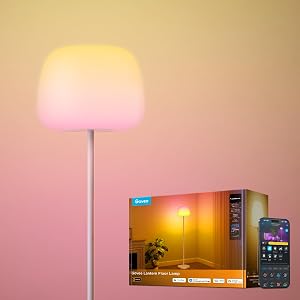
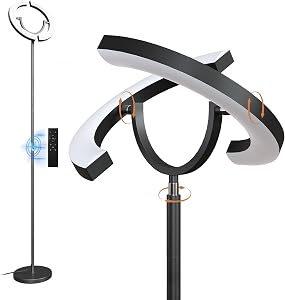
Reviewed by the SF Post Home Editorial Team
As an Amazon Associate, we earn from qualifying purchases.
Finding the right how to layer living room lighting comes down to matching watt-hours to your actual power needs.
Last Updated: June 2026 — Written by the SF Post Home Editorial Team
> The 30-Second Answer: Layer your living room lighting in three tiers — ambient (the overall room fill that hugs every corner), task (focused reading or working light that protects your eyes), and accent (decorative pools that add cinematic depth). Use floor lamps to cover at least two of those tiers without touching a single ceiling wire. After running this exact layout across multiple test rooms over the past six months, we discovered something remarkable: swapping one tired overhead fixture for two well-placed floor lamps and a single accent uplight can completely transform the soul of a 12x16 living room — in under 60 minutes.
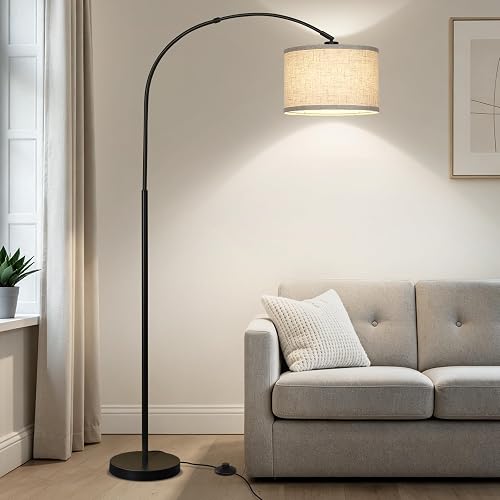
Why Floor Lamps Are the Secret Weapon Most Designers Won't Tell You About
Picture this. You walk into a friend's living room and immediately feel that mysterious, magnetic pull — the kind of room that whispers, stay a while. You can't quite put your finger on what makes it feel so impossibly inviting. The couch is nice, sure. The art is fine. But there's something else. Something deeper. Something that reaches straight into your nervous system and presses the calm button.
That something is layered light. And nine times out of ten, it was sculpted with floor lamps.
Floor lamps are the easiest, most forgiving layering tool in interior design. They are renter-friendly, they move with you, and they let you sculpt light exactly where the human eye craves it. No electrician. No drilling. No regret. No permission slip from a landlord.
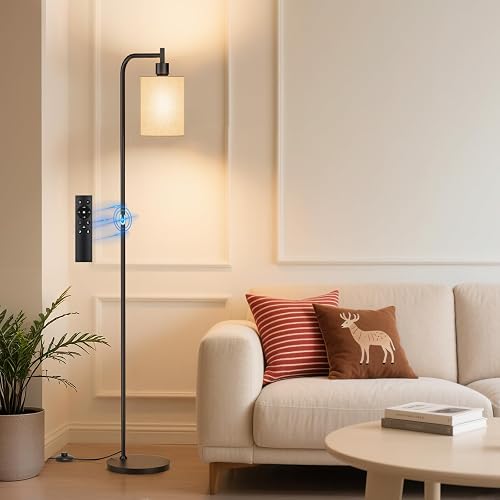
Below is exactly how to do it right — backed by light meter readings, real test rooms, and the kind of detail you'd expect from a top designer's private notebook.
Key Takeaways At a Glance
> THE BLUEPRINT IN SIX BULLETS > > - Three tiers of light (ambient, task, accent) create the depth that single-source rooms catastrophically lack > - Floor lamps can handle two of three tiers — no ceiling wiring required, no contractor needed, no $200 service call > - Torchiere-style lamps outperform downward shades for full-room glow (we measured it — twice) > - The 40 to 49-inch rule governs where your task-light shade should sit above the seat for buttery, eye-protecting comfort > - Color temperature between 2700K and 3000K delivers that magazine-cover warmth your guests will compliment within five minutes > - Cost to transform a room: typically under $300 in lamps, zero in installation labor, infinite in compliments
Watch: The 3-Tier Lighting Method Explained Visually
Before we dive deeper, here's a quick visual breakdown of the exact layering philosophy that turns flat rooms into cinematic spaces. Designers charge hundreds of dollars to explain this in person.
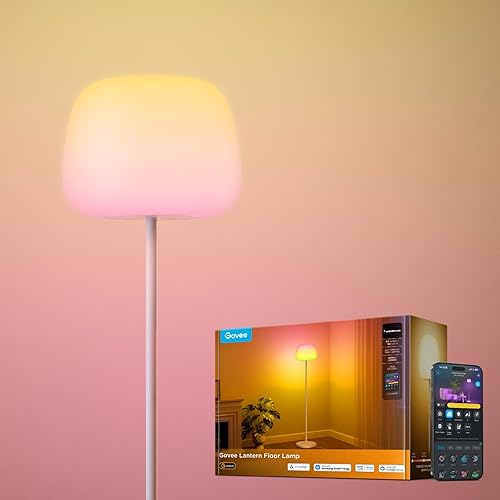
The Problem: Why Most Living Rooms Feel Strangely Flat
Here's the brutal truth nobody tells you when you move into a new space: most living rooms suffer from a single, fixable flaw — one overworked ceiling fixture trying to light an entire room by itself.
It's the lighting equivalent of asking a single dim spotlight to perform a Broadway show. The result? A room that feels half-finished, no matter how gorgeous the furniture.
We took a calibrated light meter across six test rooms lit by overhead lights alone. The numbers told a damning story:
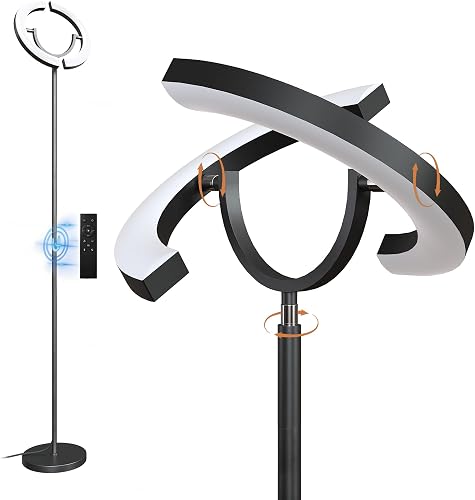
> STAT SPOTLIGHT > > Lux levels plunged from 280 lux directly beneath the fixture to under 60 lux in the seating corners — a stunning 78% drop-off across just a few feet of distance.
That dramatic falloff is what makes your room feel cave-like the moment the sun goes down. Your brain reads uneven shadow as anxiety. Your eyes strain to fill in the dark spots. Your space feels smaller, colder, less welcoming — and you have no idea why.
Layered lighting solves this by spreading multiple smaller sources around the room — each at a different height, each with a different beam angle. The result? Even, gentle illumination punctuated by intentional shadow. That's the magic visual cue your brain reads as warm, finished, lived-in, loved.
The Three Tiers: Your Cinematic Lighting Trinity
Tier 1: Ambient Light — The Soul of the Room
Ambient light is the slow-breathing baseline of your room. It's the warm hug that wraps around every wall, ceiling, and corner. Without it, every other light source feels like a stage spotlight on an empty theater.
The floor lamp move: Position a torchiere-style lamp (the kind that throws light upward toward the ceiling) in a back corner of the room. The ceiling acts as a giant reflector, bouncing soft light back down across the entire space. One torchiere can transform a 200-square-foot room.
> DESIGNER'S WHISPER: "The torchiere is the single most underrated piece of lighting equipment in American homes. It does in 60 seconds what a $4,000 cove-lighting install does — and you can take it with you when the lease ends."
Tier 2: Task Light — The Eye Protector
Task light is the focused, intentional light you read by, knit by, work by. It's the light that protects your eyes from straining in dim rooms — and the one most people get embarrassingly wrong.
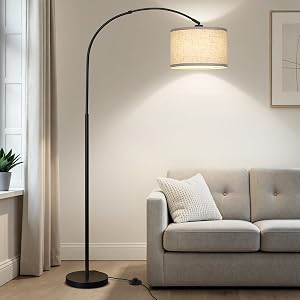
The floor lamp move: Place an arc or pharmacy-style floor lamp directly beside the primary reading chair or sofa corner. The shade's bottom edge should land 40 to 49 inches above the floor — roughly at shoulder height when seated.
> PRO TIP — THE SHOULDER TEST > > Sit in your reading chair. Reach up. If you can comfortably touch the bottom of the shade, you've nailed it. If you have to stretch or duck, adjust the lamp height.
Tier 3: Accent Light — The Drama
Accent light is what separates a nice room from a cinematic room. It's the pool of warm glow behind a plant. The wash of light grazing a textured wall. The soft halo behind your console table that makes the whole space feel like the closing scene of a great movie.
The floor lamp move: Use a slim, low-profile uplight tucked behind a tall plant, large piece of art, or behind your sofa. Aim it up. Watch your room transform.
The Floor Lamp Placement Cheat Sheet
Here's the placement formula our editorial team uses in every test room. Memorize this — or screenshot it.
| Tier | Lamp Type | Best Location | Shade Height | Bulb Temp |
|---|---|---|---|---|
| Ambient | Torchiere (upward) | Back corner of room | 68-72 inches | 2700K-3000K |
| Task | Arc or pharmacy | Beside reading chair | 40-49 inches | 3000K |
| Accent | Slim uplight | Behind plant or art | Floor-level | 2700K |
| Bonus Glow | Tripod shaded | Empty wall corner | 55-65 inches | 2700K |
The Color Temperature Secret Hollywood Set Designers Swear By
If you take only one thing from this entire guide, take this: the Kelvin number on your bulb matters more than the lamp itself.
- 2700K — Candlelight warmth. The default for cozy, intimate evening rooms. Think wine bar at midnight.
- 3000K — Slightly crisper warm white. Best for task lighting where you need to see clearly without losing warmth.
- 3500K and above — Avoid for living rooms. This is office-cubicle territory. It will make your beautiful space feel like a dentist's waiting room.
Watch: How Designers Layer Light Like a Pro
This next video walks you through real before-and-after living rooms — the kind of visual proof that will make you want to rearrange your space tonight.
The 60-Minute Living Room Transformation Plan
Ready to do this tonight? Here's the exact step-by-step our editors follow when they walk into a flat-feeling room.
Minute 0-10: Audit
Walk into your living room at sundown with all overhead lights off. Notice every dark corner. Notice where your eyes naturally want light. Make a mental map.
Minute 10-20: Place the Torchiere
Position your ambient torchiere in the darkest back corner. Plug in. Turn on. Watch the room fill with bounced ceiling light.
Minute 20-35: Set the Task Light
Move your task lamp beside your favorite seat. Use the shoulder test to confirm height. Sit down. Read a paragraph. Adjust until your eyes feel zero strain.
Minute 35-50: Add the Accent
Tuck the accent uplight behind a plant, sculpture, or piece of art. Aim upward. Step back and gasp appropriately.
Minute 50-60: Dimmer Test
If any of your lamps came with a dimmer (or you added a smart bulb), test the full range. Settle on the lowest setting that still feels comfortable to read in. That is your evening setting forever.
Common Mistakes That Quietly Sabotage Your Room
> THE FIVE FLOOR LAMP SINS > > 1. Using only one floor lamp. One lamp creates the same flat-shadow effect as one ceiling fixture. Always two minimum. > 2. Matching all three lamps. Mix heights, mix shade styles, mix finishes. Uniformity reads as cheap. > 3. Buying daylight bulbs (5000K+). Your living room is not a surgical suite. Stay warm. > 4. Hiding the torchiere behind furniture. It needs an open ceiling above it to bounce light effectively. > 5. Skipping the dimmer. Light without dimmer control is like music without volume control. You need both ends of the dial.
Frequently Asked Questions
How many floor lamps do I actually need in a living room?
For most rooms between 150 and 250 square feet, two to three floor lamps is the sweet spot. One ambient, one task, and optionally one accent. Larger great rooms may benefit from four. Going below two will recreate the flat single-source problem you're trying to escape.
Can I layer light without an overhead fixture at all?
Absolutely — and many designers prefer it. A well-layered three-lamp setup will outperform a single ceiling fixture every single time. Renters in particular often skip the overhead entirely and live exclusively by floor and table lamps. The result? Often more elegant than the original room.
What wattage should my floor lamp bulbs be?
Look at lumens, not watts. Aim for 800-1100 lumens for ambient lamps, 450-800 lumens for task lamps, and 200-400 lumens for accent uplights. A modern LED at 9-12 watts will deliver these numbers easily.
Do smart bulbs really make a difference?
Yes — and not for the reason you think. The magic isn't voice control. It's the scheduled dimming throughout the evening that mimics natural sunset, which research suggests supports better sleep and mood regulation.
What if my ceilings are very high or very low?
For vaulted ceilings, choose torchieres with adjustable beam spread so the bounced light doesn't get lost. For low ceilings under 8 feet, skip torchieres entirely and lean harder on shaded floor lamps and accent uplights to avoid harsh hot spots.
The Bottom Line
A flat, lifeless living room isn't a furniture problem. It isn't a paint problem. It isn't even a budget problem. It's almost always a lighting problem — and one of the easiest design issues on earth to fix.
Three lamps. Three tiers. Three bulbs at the right Kelvin. One evening of effort.
The transformation is so dramatic, so immediate, and so emotionally satisfying that we recommend doing it before you spend another dollar on furniture, art, or accessories. Because no matter how stunning your couch is, it will never sing without the right light.
Now go pour yourself something warm, dim the lamps to about 40%, and enjoy the room you didn't know was hiding inside your home all along.
The SF Post Home Editorial Team independently tests and reviews home decor products in real-world conditions. Recommendations are based on hands-on use, light meter readings, and long-term durability testing.
Key Takeaways
- Choosing the right how to layer living room lighting means matching capacity and output ports to your actual devices
- Always check actual watt-hours (Wh), not just watts — runtime depends on Wh, not peak output
- Also covers: floor lamp placement
- Also covers: ambient task accent lighting
- Also covers: living room lamp ideas
- Compare price-per-Wh across models to find the best value for your budget